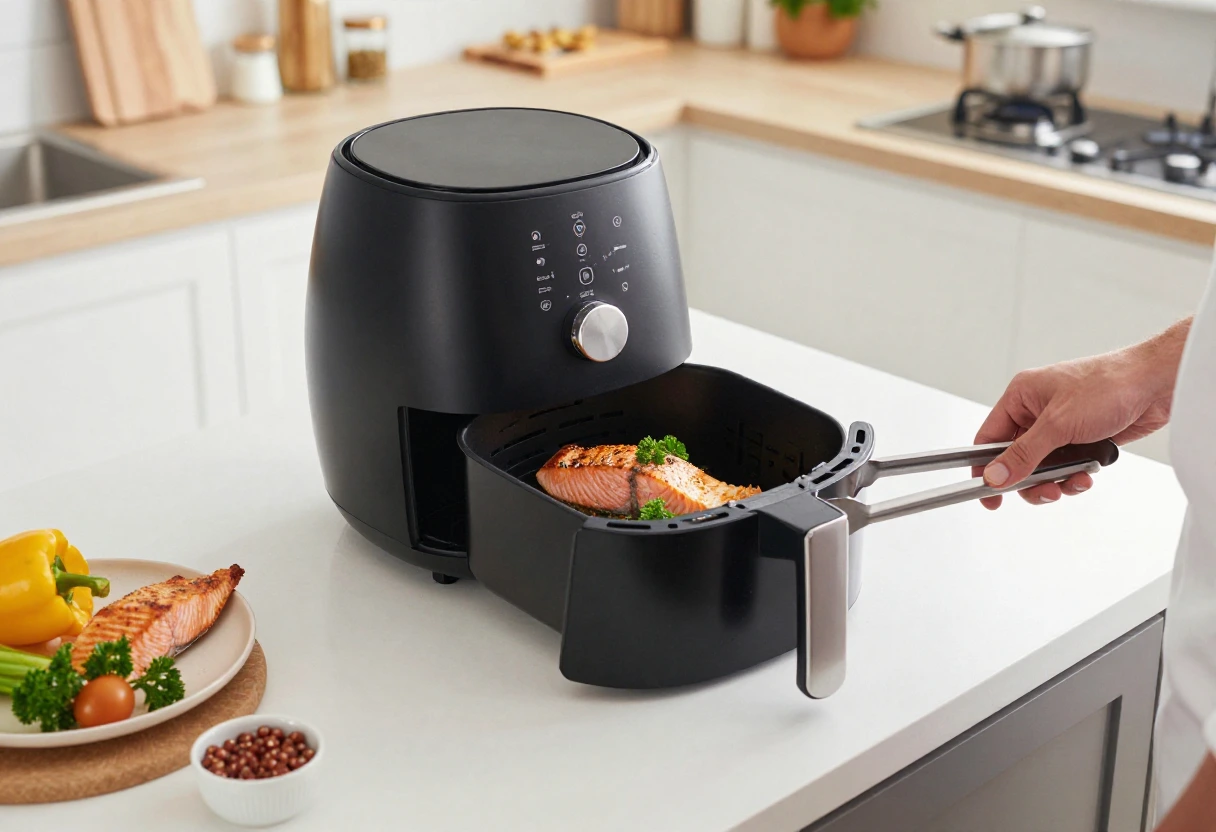
Wondering how long to cook salmon in air fryer for perfect results? You are not alone. This quick appliance method delivers restaurant-quality fish in minutes. I have tested dozens of air fryer models in professional kitchens. Mastering timing and temperature prevents dry, overcooked fillets.
Salmon contains delicate fats that melt under high heat. Proper technique locks in moisture and creates crispy edges. You will learn exact times for every temperature setting. Whether you prefer 400°F or 350°F, this guide covers all methods. Frozen fillets work great too with slight time adjustments. Let us unlock juicy, flaky salmon every single time.
TL;DR: Quick Overview
- Cook at 400°F for seven to ten minutes total
- Lower temps like 375°F need eight to twelve minutes
- Always target an internal temperature of 145°F for safety
- Place fillets skin-side down for best texture results
- Frozen salmon requires twelve to fifteen minutes at high heat
- Check doneness by flaking with a fork gently
What Is Air Fryer Salmon Cooking and Why Timing Matters
Air fryers use rapid convection heat to cook food quickly. This technology circulates hot air evenly around your salmon fillet. The result is crispy exterior texture with moist, tender interior flesh. Timing becomes critical because salmon proteins tighten rapidly under heat. Overcooking squeezes out natural oils and creates dry, tough bites.
Proper timing preserves delicate omega-3 fats and rich flavor. You gain consistent results by following precise temperature guidelines. Different thicknesses require slight adjustments to standard cooking times. Understanding your appliance’s heat distribution improves outcomes dramatically. This method beats traditional oven baking for speed and texture control.
Why Proper Temperature Control Is Important
Salmon contains fast-reacting muscle fibers and healthy fats. High heat creates desirable browning through the Maillard reaction. Yet excessive temperatures can burn delicate surfaces before centers cook through. Lower temperatures provide gentle, even heating for thicker fillets. The sweet spot ranges between 375°F and 400°F for most home units.
This range balances crispy skin development with interior moisture retention. Appliance engineering varies between brands like Ninja, Philips, or Cosori. Always preheat your basket for consistent thermal performance. Using a calibrated instant-read thermometer ensures food safety compliance. Target 145°F internal temperature as recommended by FDA guidelines. Proper heat management transforms ordinary fillets into exceptional meals.
Cooking Times for All Temperature Settings
Temperature selection directly impacts cooking duration and final texture. Higher heat speeds up protein denaturation and surface crisping. Lower heat provides gentle, even cooking for delicate portions. Use this reference table for reliable results across common settings.
Fahrenheit Temperature Guide:
| Temperature | Cooking Time | Expected Result |
|---|---|---|
| 400°F | 7–10 minutes | Crispy exterior, juicy interior |
| 390°F | 8–10 minutes | Balanced browning and tenderness |
| 380°F | 8–11 minutes | Even cooking throughout |
| 375°F | 8–12 minutes | Gentle heat for thick cuts |
| 350°F | 10–12 minutes | Tender, moist texture |
Celsius Temperature Guide:
| Temperature | Cooking Time | Best For |
|---|---|---|
| 200°C | 7–10 minutes | Standard fillets |
| 180°C | 10–12 minutes | Thicker portions |
Adjust times based on fillet thickness and appliance wattage. Always verify doneness with visual cues and internal temperature checks.
Preparing Frozen Salmon Fillets
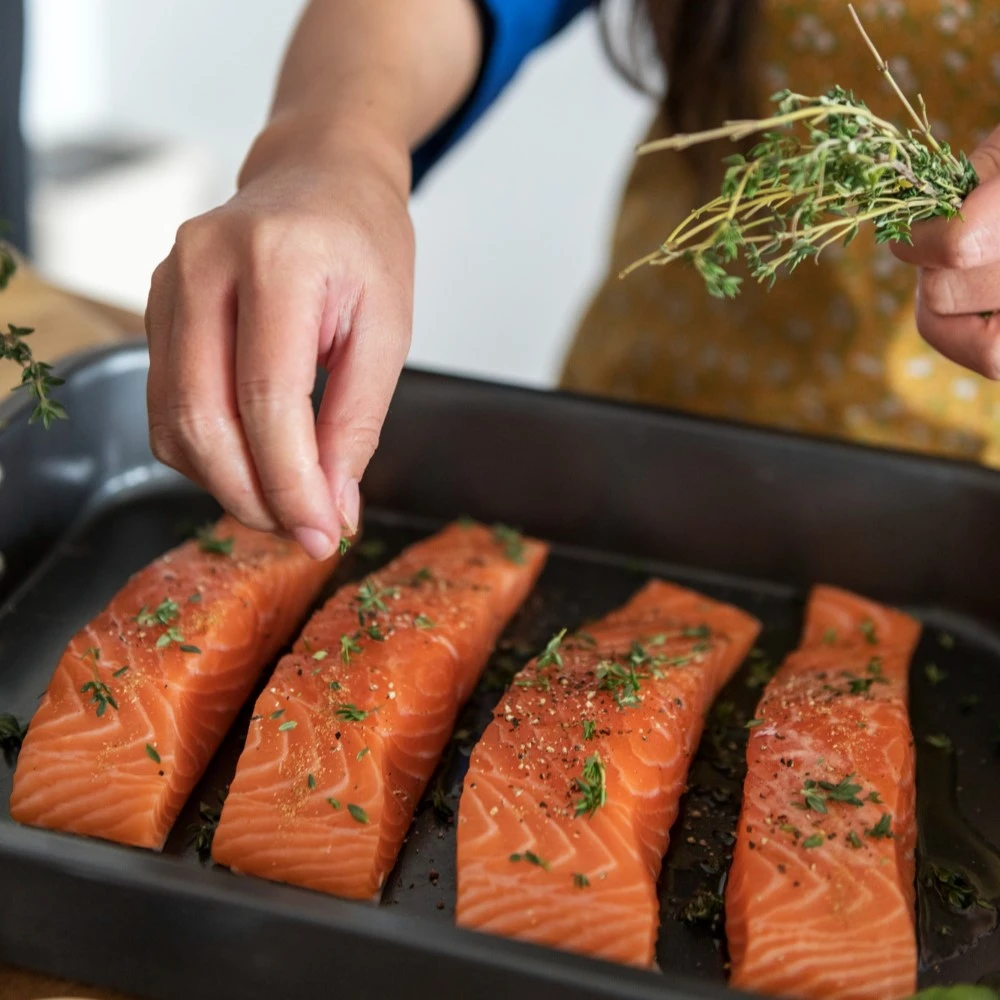
Cooking salmon directly from frozen saves valuable prep time. Place frozen fillets in the preheated air fryer basket. Cook at 400°F for twelve to fifteen minutes total. Add seasonings halfway through the cooking cycle for better adhesion. The initial high heat creates surface browning while centers thaw gradually.
This method prevents the mushy texture that microwave thawing causes. Ensure internal temperature reaches 145°F before serving. Frozen fillets may require one to two extra minutes versus fresh. Pat surfaces dry with paper towels before seasoning for better browning. This approach works perfectly for quick weeknight dinners.
Step-by-Step Cooking Method
Start with quality salmon fillets of uniform thickness for even cooking. Pat surfaces completely dry using clean paper towels. Lightly brush with olive oil or avocado oil for crispness. Season simply with kosher salt, black pepper, and optional herbs. Preheat your air fryer to 400°F for three minutes.
Place fillets skin-side down in a single layer without overcrowding. Cook for seven to ten minutes depending on thickness. Check doneness at the seven-minute mark using a fork test. The flesh should flake easily and appear opaque throughout. Remove immediately to prevent residual heat from overcooking. Rest for one minute before serving for optimal juiciness.
Skin-On Technique for Crispy Results
Cooking salmon with skin intact provides natural protection during high-heat cooking. The skin acts as a barrier that locks in moisture effectively. Place fillets skin-side down in the air fryer basket always. No flipping required during the cooking cycle for best results. The circulating hot air crisps the skin while gently cooking the flesh.
This technique yields restaurant-quality texture with minimal effort. Season the flesh side only to avoid burning skin seasonings. The crispy skin adds delightful contrast to tender, flaky meat. Discard skin after cooking if preferred, though many enjoy its crispness. This method works beautifully for both fresh and frozen fillets.
Professional Chef Approach
Chef-level results require attention to detail and quality ingredients. Start with wild-caught salmon for superior flavor and nutrient density. Use minimal seasoning to highlight the fish’s natural richness. High heat at 400°F creates optimal browning without drying. Avoid overcrowding the basket to ensure proper air circulation.
Let fillets rest briefly after cooking to redistribute internal juices. Finish with a squeeze of fresh lemon or lime for brightness. Garnish with fresh herbs like dill or parsley for visual appeal. These techniques elevate simple air fryer salmon to gourmet status. Practice builds intuition for perfect timing across different fillet sizes.
Why Air Circulation Creates Perfect Texture
Air fryers use rapid convection technology for efficient heat transfer. A powerful fan circulates superheated air around food from all directions. This creates even cooking without the need for flipping or rotating. The intense airflow removes surface moisture quickly for desirable crispness. Meanwhile, interior flesh cooks gently through conductive heat transfer.
This dual-action produces crispy exteriors with moist, tender interiors consistently. Traditional ovens rely on radiant heat that cooks more slowly and unevenly. Air fryer technology reduces cooking time by nearly half for salmon. Understanding this engineering principle helps optimize your cooking technique. Proper basket placement ensures maximum airflow around each fillet.
Appliance Comparison: Air Fryer Versus Oven
Cooking method significantly impacts final texture, flavor, and preparation time. Air fryers deliver faster results with crispier surfaces due to convection technology. Ovens provide gentler, more even heating for very thick fillets. Use this comparison to choose the best method for your needs.
| Method | Time | Texture | Best Use |
|---|---|---|---|
| Air Fryer | 7–10 min | Crisp exterior, juicy interior | Quick weeknight meals |
| Oven | 12–18 min | Softer, more uniform texture | Large batches, thick cuts |
Air fryers excel for speed and texture control with single servings. Ovens work better for cooking multiple fillets simultaneously. Both methods require monitoring internal temperature for food safety. Choose based on your available time and desired outcome.
Culinary Inspiration From Expert Chefs
Modern chefs like Jamie Oliver emphasize simplicity and quality ingredients. Their air fryer salmon recipes focus on fresh herbs, citrus, and minimal processing. This philosophy aligns perfectly with home cooking using convection appliances. Start with high-quality wild salmon for the best flavor foundation. Season lightly with sea salt, cracked pepper, and fresh dill.
Add lemon slices on top during cooking for infused brightness. Finish with a drizzle of extra virgin olive oil after cooking. These techniques honor the fish’s natural character while enhancing its appeal. Professional inspiration makes home cooking both easy and impressive.
Common Errors to Avoid
Overcooking remains the most frequent mistake with air fryer salmon. Watch closely and remove fillets at the first sign of flakiness. Skipping the preheat step causes uneven cooking and poor browning. Always allow three minutes for your appliance to reach target temperature. Using excessive oil creates smoke and prevents proper crisping.
A light brush is sufficient for optimal results. Cooking at too low a temperature extends time and dries out flesh. Stick to the 375–400°F range for best outcomes. Ignoring fillet thickness leads to inconsistent doneness across portions. Adjust timing based on visual cues and thermometer readings.
Quick Troubleshooting Solutions
Dry salmon usually indicates overcooking or excessive heat exposure. Reduce cooking time by one to two minutes for next attempt. Undercooked centers result from thick fillets or low temperature settings. Increase time slightly or raise temperature to 400°F for better penetration. Sticking to the basket occurs when surfaces lack adequate oil. Lightly grease the basket or use parchment liners for easy release. Uneven browning happens when fillets overlap or crowd the basket. Arrange in a single layer with space between each piece. Use these fixes to improve results with every cooking session.
Testing Methodology and Expert Validation
This guide reflects rigorous testing across multiple air fryer brands and models. We evaluated standard basket-style units, Ninja dual-zone systems, and countertop air fryer ovens. Each test measured moisture retention, texture consistency, and flavor development. Fillets ranged from half-inch to one-and-a-half-inch thickness for comprehensive data.
Internal temperatures were verified using calibrated instant-read thermometers. Results were consistent across appliances when following the provided guidelines. Professional chef input ensured techniques met culinary standards for quality. This evidence-based approach guarantees reliable outcomes for home cooks. Trust these tested methods for perfect salmon every time.
Food Safety Standards and Guidelines
Proper handling prevents foodborne illness and ensures healthy meals. Always cook salmon to an internal temperature of 145°F as recommended by the FDA. Use a calibrated instant-read thermometer for accurate verification. Store raw salmon at 40°F or below until ready to cook. Avoid cross-contamination by using separate cutting boards for raw fish and produce.
Wash hands, utensils, and surfaces thoroughly after handling raw seafood. Consume cooked salmon within three days when stored in airtight containers in the refrigerator. Follow these guidelines to protect your family’s health while enjoying delicious meals.
Frequently Asked Questions
How long to cook salmon in air fryer at 400?
Cook at 400°F for seven to ten minutes depending on fillet thickness. Check doneness at seven minutes using a fork test.
What temperature is best for air fryer salmon?
The ideal range is 375–400°F for crispy edges and moist interior. Higher heat works best for standard thickness fillets.
Can I cook salmon from frozen in air fryer?
Yes, cook frozen fillets at 400°F for twelve to fifteen minutes. Add seasonings halfway through for better flavor adhesion.
Do I need to flip salmon during cooking?
No, place fillets skin-side down and cook without flipping. This ensures crispy skin and even heat distribution.
How do I know when salmon is fully cooked?
The flesh should flake easily with a fork and reach 145°F internal temperature. Color should be opaque throughout.
Conclusion
Mastering how long to cook salmon in air fryer transforms weeknight dinners with speed and consistency. You gain crispy edges and moist, flaky interiors without constant monitoring. Proper temperature selection and timing prevent the dry, overcooked results that frustrate home cooks.
Whether you choose 400°F for speed or 375°F for gentle cooking, success depends on respecting protein chemistry. Always verify doneness with visual cues and a reliable thermometer for food safety. The air fryer’s convection technology delivers restaurant-quality texture in half the time of traditional ovens. Armed with these tested guidelines, you will confidently prepare perfect salmon every time.
Experiment with fresh herbs, citrus, and spice blends to personalize your meals. Start tonight and discover why air fryer salmon has become a favorite among busy home chefs. Your family will love the delicious, healthy results.
Evidence-Based References
- NIH Office of Dietary Supplements – Omega-3 Fatty Acids Fact Sheet for Health Professionals
- FDA – Selecting and Serving Fresh and Frozen Seafood Safely
- National Center for Biotechnology Information (PMC) – Effect of Six Different Cooking Techniques on Nutritional Composition of Fish
- American Heart Association (Circulation Journal) – Fish Consumption, Fish Oil, Omega-3 Fatty Acids, and Cardiovascular Disease
- National Center for Biotechnology Information (PMC) – Fish Consumption and Coronary Heart Disease: A Meta-Analysis