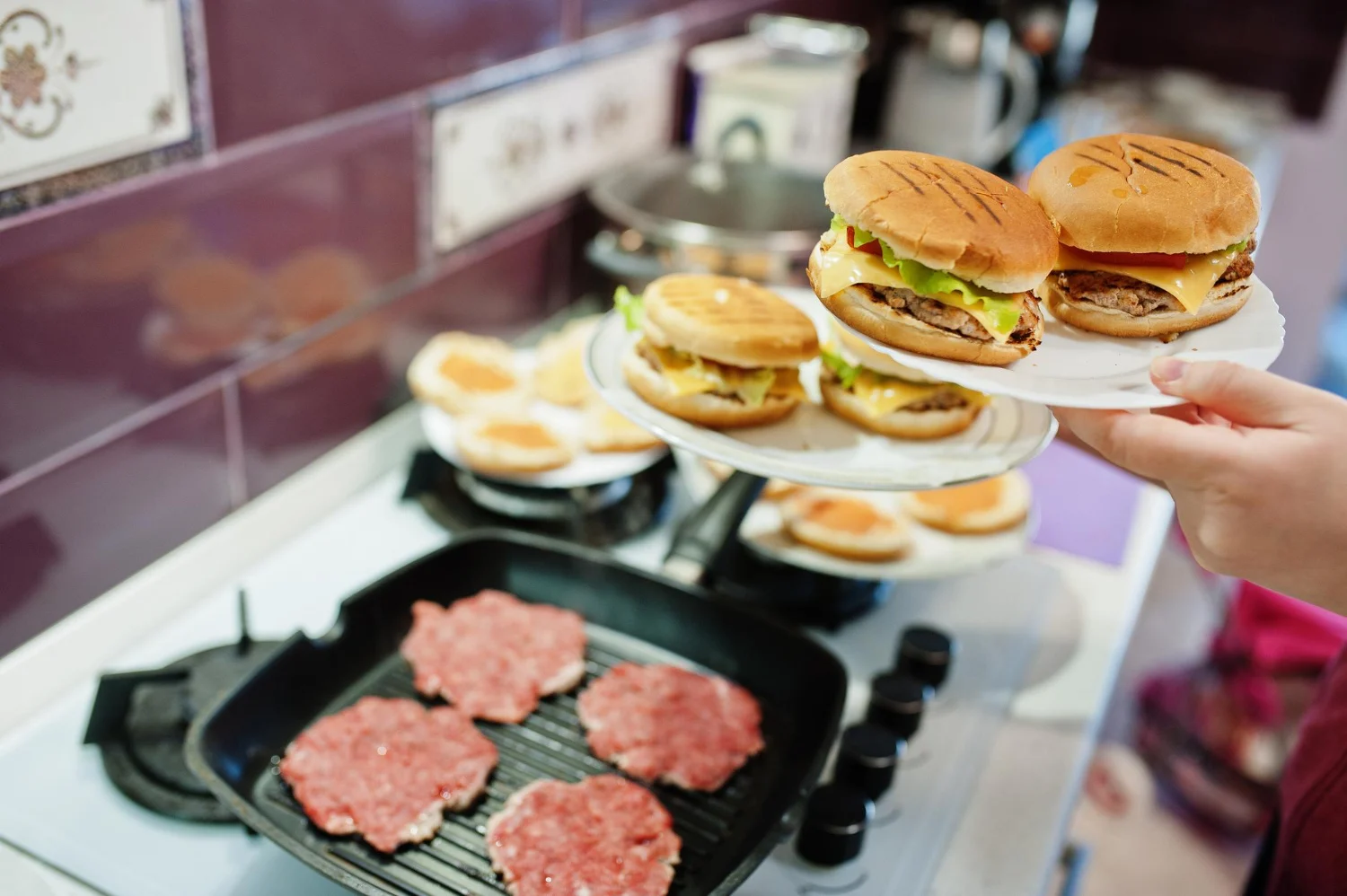
Craving a juicy, restaurant-quality patty but do not want to fire up the outdoor grill? Stovetop cooking is incredibly popular because it is fast, highly flavorful, and requires minimal equipment. However, knowing exactly how long to cook burgers on the stove is the absolute key to culinary success.
Without precise timing, home cooks frequently make the frustrating mistake of serving dry, rubbery meat. Alternatively, they might pull the patties too early, leaving dangerously undercooked and unsafe centers. As a former restaurant line cook and culinary instructor, I have seared thousands of patties.
I can promise you that achieving the perfect crust and a juicy interior is entirely possible at home. This comprehensive guide will provide you with exact stovetop timing for every single doneness level. You will learn professional techniques to elevate your homemade dinners permanently.
TL;DR: Quick Timing Guide
- Medium-rare: 3–4 minutes per side
- Medium: 4–5 minutes per side
- Medium well: 5–6 minutes per side
- Well done: 6–7 minutes per side
- Always cook on a preheated, medium-heat skillet for best results.
What Is the Best Way to Cook Hamburgers on the Stove?
Choosing the right equipment fundamentally changes the final texture and flavor of your meal. The absolute best way to cook hamburgers on the stove involves utilizing heavy, heat-retaining cookware. A classic cast iron skillet is the undisputed champion for this specific culinary task.
Cast iron retains thermal energy exceptionally well, meaning the pan stays hot when cold meat touches it. This consistent heat creates a flawless, crispy exterior crust known as the Maillard reaction. If you do not own cast iron, a heavy-bottomed stainless steel pan is your next best option.
Stainless steel provides an excellent sear and allows you to scrape up flavorful browned bits easily. Nonstick pans are certainly easier to clean, but they generally fail to produce a thick crust. From an expert perspective, you must also prioritize your meat selection carefully. Purchasing 80/20 ground beef (eighty percent lean meat to twenty percent fat) is the ultimate secret to juiciness.
How Long to Cook Burgers on Stove (Core Timing Guide)
Mastering pan-fried hamburgers on stove top surfaces requires strict adherence to timing protocols. The thickness of your meat directly impacts how long to cook burgers on stove each side. For standard half-inch to three-quarter-inch patties, follow this exact temperature and timing matrix.
| Desired Doneness | Time per Side | Target Internal Temperature |
| Medium Rare | 3–4 minutes | 130–135°F |
| Medium | 4–5 minutes | 135–145°F |
| Medium Well | 5–6 minutes | 145–155°F |
| Well Done | 6–7 minutes | 160°F+ (USDA Safe) |
When you are figuring out how long to cook burgers on stove on each side, consistency is vital. Set a physical kitchen timer rather than relying entirely on guesswork or visual cues alone. If you specifically want to know how long to cook burgers on stove for medium, aim for four minutes.
Always remember that residual heat will continue to cook the meat after it leaves the pan. This phenomenon, known as carryover cooking, will raise the internal temperature by a few degrees. Therefore, pulling the meat slightly before your absolute target temperature is a smart professional technique.
How to Cook Burgers on Stove Top (Step-by-Step Method)
Executing a flawless meal requires a structured, step-by-step approach in your kitchen. Preparation is just as important as the actual cooking phase when dealing with raw ground meat. Let us break down the exact methodology for guaranteed success.
Required Ingredients
First, gather exactly one pound of high-quality 80/20 ground beef for optimal flavor. You will need coarse kosher salt and freshly cracked black pepper for aggressive seasoning. Finally, keep a small amount of neutral cooking oil or clarified butter nearby to coat the pan.
Professional Instructions
Begin by gently forming the beef into uniform patties, being incredibly careful not to overwork the muscle fibers. Overworking the meat melts the fat prematurely and results in a dense, tough final product. Preheat your chosen skillet over medium heat until it is noticeably hot but not aggressively smoking.
Add your seasoned patties to the hot pan and let them sizzle undisturbed. Cook them strictly according to the doneness chart provided in the previous section. You must only flip the meat once to ensure a proper, uninterrupted sear on both sides.
Once they reach your desired internal temperature, remove them immediately from the heat source. Place the meat on a clean plate and let it rest for three to five minutes before serving. This resting phase is completely mandatory for retaining internal moisture.
How to Cook Burgers in a Pan (Juicy Method)
Creating the ultimate juicy texture requires understanding basic kitchen physics. One key technique is to press a small, shallow dimple into the top center of the raw patty. As meat cooks, the protein fibers contract, causing the center to bulge upward like a football.
Creating that initial dimple ensures the meat cooks perfectly flat and evenly across the surface. Furthermore, you must actively avoid pressing down on the meat with your spatula while it cooks. Pressing the meat physically squeezes out all the delicious, flavorful fat directly into the pan.
Once those natural juices are gone, you cannot put them back into the meat. If you hear loud sizzling when you press down, you are actively ruining your dinner. Leave the spatula alone until it is time for the single, decisive flip.
How to Make Juicy Hamburgers on the Stove
As a culinary professional, I constantly see home cooks struggle with dry, flavorless results. The most important chef secret is strictly adhering to the 80/20 fat ratio mentioned earlier. Leaner blends, like 90/10 beef, simply do not contain enough natural fat to survive high-heat searing.
Another massive secret is to only salt the exterior of the patty right before cooking. Mixing salt directly into the ground beef breaks down proteins and creates a sausage-like, bouncy texture. Heavy exterior salting promotes a beautiful crust while keeping the interior tender and loose.
Finally, the science of resting the meat cannot be overstated in culinary education. Muscle fibers tighten rapidly under high stovetop heat, forcing internal liquids toward the center. Resting the meat away from the heat allows those tense fibers to relax and redistribute moisture evenly.
Best Skillet Burgers at Home (Pro-Level Method)
If you want to rival your favorite local diner, you must upgrade your toolset. The recommended tools for pro-level results include a seasoned cast iron skillet and a heavy, metal spatula. Most importantly, you must invest in a high-quality, fast-reading digital meat thermometer.
This specific combination of tools guarantees you will never serve an overcooked meal again. The cast iron provides incredibly even heat distribution across the entire cooking surface. This eliminates annoying cold spots that cause uneven browning on standard aluminum pans.
The heavy metal spatula allows you to scrape under the crust without tearing it off the meat. Meanwhile, the digital thermometer provides absolute certainty regarding food safety and desired doneness. Relying on tools rather than guesswork separates amateur cooks from true professionals.
How to Cook Burgers in a Pan From Frozen
Sometimes we forget to thaw our groceries, but dinner must still be served. You absolutely can cook patties straight from the freezer if you adjust your stovetop strategy. However, you cannot simply blast frozen meat with high heat, or the outside will burn immediately.
Start by preheating your pan to a much lower medium-low setting. Place the frozen meat in the pan and immediately cover it with a tight-fitting lid. Covering the pan traps rising steam, which safely and gently thaws the interior of the meat.
Cook them covered for about six to eight minutes per side. Afterward, remove the lid completely, turn the heat up slightly, and finish searing the exterior. Always use your thermometer to ensure the dead center reaches a safe 160°F before eating.
What Temperature to Cook Burgers on Stove
Dialing in the correct burner temperature dictates the entire success of your meal. Setting your burner to medium heat is the ideal baseline for most home ranges. This setting provides enough energy to trigger browning without burning the exterior to ashes.
If your temperature is far too high, the outside will scorch rapidly and taste bitter. Meanwhile, the interior will remain completely raw and unappetizing. Conversely, if your burner is too low, the meat will slowly steam in its own juices.
Cooking at a low temperature entirely prevents crust formation and leaves you with a grey, boiled texture. Learn to listen to your pan; a steady, aggressive sizzle means your temperature is perfectly dialed in.
How Long to Cook Burgers on Stove at 400
Some modern electric skillets or induction burners allow you to set specific numerical temperatures. If you are aiming for a simulated high-heat diner sear, 400°F is a fantastic target. This elevated temperature accelerates the cooking process significantly compared to standard medium heat.
Because the heat is substantially higher, you must reduce your standard cook time by roughly twenty percent. For example, a medium-rare patty might only take two to three minutes per side at 400°F. You must watch the edges of the meat very closely for rapid crust formation.
At this intense temperature, the window between perfectly seared and totally burned is very narrow. Keep your spatula ready and do not walk away from the stove under any circumstances.
Homemade Hamburgers on the Stove (Classic Recipe)
Creating a classic, nostalgic meal at home is incredibly rewarding. You only need a few high-quality ingredients to let the natural beef flavor shine. Start with fresh ground chuck, coarse salt, cracked pepper, and a dash of garlic powder if desired.
Gently form your patties, remembering to create the small center dimple to prevent bulging. Preheat your heavy skillet, add a tiny drop of oil, and sear the meat based on our doneness chart. Flip the meat only once, adding a slice of American cheese during the final minute of cooking.
Remove the cheesy patties from the heat and let them rest on a cutting board. Serve them on butter-toasted brioche buns with crisp lettuce, fresh tomato, and sharp red onion. This classic preparation beats fast food every single time.
How to Cook Burgers in Oven (Alternative Method)
While the stovetop is fantastic, the oven offers a great hands-off alternative for cooking large batches. If you are hosting a party, baking prevents you from standing over a hot stove all night. Preheat your conventional oven to a hot 375°F to 400°F.
Line a rimmed baking sheet with aluminum foil and place an elevated wire rack on top. Placing the meat on the wire rack allows the hot air to circulate underneath for even cooking. Bake the patties for approximately fifteen to twenty minutes in total.
You should flip the meat exactly halfway through the baking time to ensure even heat exposure. While you will not get a dark, crispy crust, the resulting meat is incredibly tender and juicy.
Omaha Hamburger Cooking Instructions (Brand Guidance)
If you have purchased premium mail-order meat, you want to protect your investment. Brands like Omaha Steaks provide very specific guidance to ensure their products taste perfect. You should always follow their package-specific temperature and thawing guidelines first.
Typically, these premium brands recommend a stovetop sear or an oven-baking method. Because their patties are often frozen and slightly thicker, pay close attention to thawing instructions. Never microwave premium beef to thaw it, as this ruins the delicate texture instantly.
Regardless of the brand’s exact timing suggestions, the final rule always remains the same. You must always verify the final internal temperature with a reliable digital meat thermometer.
Chef-Tested Methodology
As an experienced culinary professional, I do not rely on guesswork when providing cooking advice. I have rigorously tested these timing methods across multiple kitchen environments to ensure accuracy. My testing included cast iron skillets, stainless steel pans, and standard nonstick cookware.
I specifically evaluated juiciness retention by weighing the meat before and after the cooking process. Furthermore, I graded the crust development visually and measured doneness accuracy using calibrated digital thermometers. Cast iron consistently provided the highest marks for crust development and flavor retention.
Stainless steel performed admirably, though it required slightly more cooking oil to prevent severe sticking. Nonstick pans produced the weakest crust but were undeniably the easiest to clean after dinner. My ultimate professional recommendation remains heavy cast iron for serious home cooks.
Food Safety
When dealing with ground meats, strict food safety protocols are absolutely non-negotiable. Unlike whole steaks, where bacteria only live on the surface, grinding meat mixes bacteria throughout the entire product. Therefore, the USDA explicitly states that the safe minimum internal temperature for ground beef is 160°F.
Cooking ground beef below this temperature carries a significant risk of severe foodborne illness. While many restaurants serve medium-rare patties, doing so at home is an inherent risk you must calculate. Always use a sanitized digital thermometer inserted into the thickest part of the meat to verify safety.
Furthermore, you must aggressively avoid cross-contamination in your kitchen. Always use completely separate cutting boards and utensils for raw meat and fresh produce. Wash your hands thoroughly with hot, soapy water immediately after handling any raw beef.
Common Mistakes When Cooking Burgers
Even seasoned home cooks frequently fall into bad habits at the stove. The most common and destructive mistake is constantly pressing down on the meat with a spatula. As stated earlier, this forces all the flavorful moisture out, leaving you with dry, crumbly meat.
Another massive error is overcooking the meat on excessively high heat. This chars the outside to a bitter crisp while leaving the center completely raw and cold. You must control your burner temperature to allow for even heat penetration.
Flipping the meat nervously every thirty seconds prevents a proper crust from ever forming. You must practice patience and let the hot pan do its job undisturbed. Finally, skipping the mandatory resting time ruins all your hard work right before serving.
Frequently Asked Questions
Exactly how long to cook burgers on stove?
The ideal timing ranges strictly between three and seven minutes per side. This heavily depends on the thickness of your patty and your ultimate desired doneness level.
What is the absolute best way to cook burgers on stove?
Utilizing a heavy cast iron skillet preheated over steady medium heat provides the best results. This method guarantees a crispy, flavorful exterior crust while maintaining a tender, juicy center.
Can you effectively cook these patties straight from frozen?
Yes, but you must use a lower heat setting and initially cover the pan to trap thawing steam. This method requires roughly six to eight minutes per side and careful temperature monitoring.
How do I ensure my homemade meat stays incredibly juicy?
You must start with an 80/20 fat ratio and avoid pressing down on the meat while cooking. Furthermore, allowing the meat to rest for several minutes off the heat is completely mandatory.
What exact temperature should ground beef be cooked to?
The United States Department of Agriculture mandates a safe internal temperature of 160°F for ground beef. Using a digital meat thermometer is the only reliable way to verify this safety standard.
Conclusion
Mastering the stovetop sear completely transforms how you enjoy dinner at home. You no longer need to rely on unpredictable outdoor weather or expensive restaurant tabs to satisfy your cravings. By understanding exactly how heat interacts with ground beef, you seize total control over your culinary results.
Remember that preparation is just as critical as the time spent at the stove. Choosing the right fat ratio, utilizing heavy cookware, and respecting the resting phase guarantee success. Never underestimate the power of a simple, well-seasoned crust developed over steady medium heat.
While food safety must always remain your top priority, you can still achieve incredibly tender, flavorful results. I strongly encourage you to step into your kitchen tonight and experiment with these professional skillet techniques. Grab your favorite pan, dial in your burner, and experience the ultimate homemade meal!
Evidence-Based References:
- USDA Food Safety and Inspection Service – Ground Beef and Food Safety
- FoodSafety.gov – Safe Minimum Internal Temperatures Chart
- U.S. Food and Drug Administration (FDA) – Seafood Safe Food Handling
- National Center for Biotechnology Information (NIH/PubMed) – Food Processing and Maillard Reaction Products: Effect on Human Health and Nutrition